Integrating Boorney into Your Creative and Business Workflows
In the landscape of digital design and content creation, the choice of typography often dictates the tone and effectiveness of a project. Boorney is not merely a decorative typeface; it is a functional asset designed to inject personality into structured environments. As a playful display font, it serves as a strategic tool for professionals who need to balance visual engagement with clear communication. Whether you are a small business owner finalizing a brand identity or a freelancer preparing a client presentation, understanding where Boorney fits within your broader process is essential for successful implementation.
Defining the Role of Boorney in Design Systems
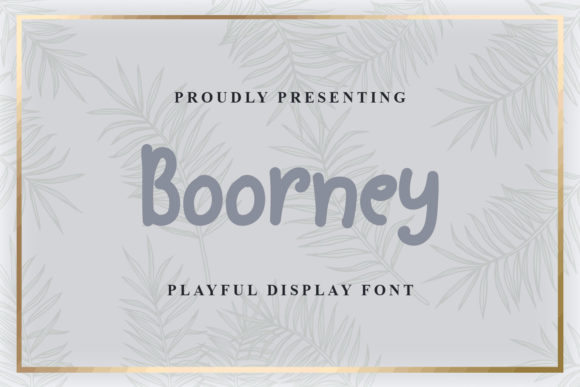
Before integrating any new asset into a workflow, it is crucial to understand its specific capabilities and limitations. Boorney is characterized by its whimsical, hand-drawn aesthetic, making it ideal for display purposes rather than body text. This distinction is vital for maintaining readability and professional standards across various media. When used correctly, it acts as a focal point that draws attention without overwhelming the viewer. In a practical sense, this font functions best when paired with clean, sans-serif or serif fonts that provide structural stability.
The versatility of Boorney allows it to adapt to multiple stages of a project lifecycle. It is not restricted to the final output phase but can be utilized during the conceptualization and planning stages. For instance, educators might use it to create engaging learning materials, while marketers may leverage it for social media graphics that require immediate visual impact. The key to effective usage lies in recognizing that Boorney is a statement font. It communicates enthusiasm, approachability, and creativity, which makes it particularly suitable for industries focused on community building, education, and lifestyle branding.
Strategic Placement Before Project Execution
Preparation is the cornerstone of efficient workflow management. Incorporating Boorney at the planning stage ensures consistency throughout the execution phase. When brainstorming concepts for a new product launch or a marketing campaign, designers should evaluate whether the playful nature of Boorney aligns with the core message. If the goal is to humanize a brand or simplify complex information, selecting Boorney early in the mood board phase sets the right trajectory.
This pre-production consideration extends to technical compatibility. Professionals must verify that the font files support the necessary character sets for their intended platforms. Since Boorney is often used for SVG designs and digital assets, checking for proper encoding and vector integrity prevents rendering issues later. By addressing these technical requirements during the initial setup, teams can avoid costly revisions and ensure that the final deliverables meet quality control standards.
Executing Projects with Boorney
Once the decision to use Boorney has been made, the focus shifts to execution. The font's application varies significantly depending on the medium. For physical crafting projects, such as stickers or signage, the bold strokes of Boorney translate well to cutting machines like Cricut or Silhouette. However, success in this area depends heavily on file preparation. Users must ensure that their vectors are properly closed and optimized before sending them to the cutter.
- SVG Design Optimization: When creating scalable vector graphics, maintain high contrast between the Boorney letters and the background elements to preserve legibility at different sizes.
- Logo Development: Use Boorney for the primary wordmark but pair it with a secondary, more neutral font for subheadings to ensure scalability across business cards and merchandise.
- Sticker Production: Consider the color palette carefully. Playful fonts often benefit from vibrant colors, but ensure sufficient contrast exists for visibility in low-light conditions.
In the realm of digital branding, Boorney offers a unique opportunity to differentiate a business in a saturated market. Entrepreneurs often struggle to convey warmth in their digital presence. Integrating this font into email headers, website banners, or promotional videos can bridge that gap effectively. The process involves balancing the playful nature of the font with the need for professional credibility. This balance is achieved by limiting the usage of Boorney to headlines and key calls-to-action, allowing the rest of the content to remain grounded in standard typography.
Collaboration and Asset Management
Creative workflows rarely happen in isolation. They involve collaboration between designers, developers, and clients. To maintain efficiency, it is important to organize Boorney assets logically. Creating a dedicated folder structure for the font files, along with style guides that specify usage rules, ensures that all team members adhere to the same standards. This organization reduces friction during the review process and minimizes the risk of inconsistent branding.
When working with external partners or freelancers, providing clear guidelines on how to implement Boorney is essential. This includes specifying font weights, sizing ratios, and pairing recommendations. By establishing these parameters early, stakeholders can visualize the final outcome more accurately. Furthermore, documenting the licensing terms associated with Boorney protects the business from legal complications. Understanding the scope of use—whether for personal, commercial, or extended enterprise applications—is a critical step in the procurement process.
Post-Implementation and Long-Term Maintenance
The lifecycle of a design project does not end at launch. Long-term maintenance requires monitoring the performance of the chosen typography. For businesses using Boorney in logos or major branding elements, it is wise to gather feedback on how the font resonates with the target audience over time. User testing can reveal if the playful aesthetic remains relevant or if it risks appearing dated as trends shift.
Efficiency in post-launch phases also involves managing updates and replacements. If a project requires a redesign, having the original source files of Boorney readily available simplifies the transition. Digital libraries should be kept current to prevent version mismatches. Additionally, creators should consider accessibility standards. While Boorney is visually striking, ensuring that text remains readable for users with visual impairments is a responsibility that cannot be overlooked. Adjusting spacing, contrast, and size can mitigate potential accessibility barriers while retaining the font's charm.
Evaluating Outcomes and Iteration
Measuring the success of Boorney integration involves analyzing engagement metrics and user behavior. For bloggers and publishers, tracking click-through rates on headlines styled with Boorney can provide insights into its effectiveness compared to other typefaces. Marketers might observe changes in conversion rates when using the font in call-to-action buttons versus standard sans-serif options. These data points inform future decisions and help refine the creative strategy.
Iterative improvement is a natural part of any robust workflow. If initial results indicate that Boorney is too distracting in certain contexts, adjustments can be made. Perhaps reducing the frequency of use or altering the color scheme yields better results. The flexibility of the font allows for experimentation without compromising the overall brand identity. By treating typography as a dynamic element rather than a static rule, professionals can adapt to changing market demands while maintaining a cohesive visual language.
Practical Tips for Seamless Integration
To maximize the utility of Boorney, creators should adopt a disciplined approach to its application. Start by defining the hierarchy of information within your document or design. Use Boorney for top-level headings to establish a strong visual anchor. Reserve neutral fonts for paragraphs and detailed explanations to ensure that the reader's eye flows naturally through the content.
- Consistency is Key: Avoid mixing Boorney with other display fonts that compete for attention. Stick to one playful font per project to maintain clarity.
- Test Across Devices: Ensure that Boorney renders correctly on mobile screens, tablets, and desktops. Display fonts can sometimes suffer from scaling issues on smaller devices.
- Pair Thoughtfully: Combine Boorney with minimalist fonts to let the playfulness shine without cluttering the design.
- Leverage White Space: Give the font room to breathe. Crowded layouts diminish the impact of display typography.
Ultimately, Boorney is a powerful tool for those willing to invest time in understanding its nuances. It transforms ordinary projects into memorable experiences by adding a layer of human connection. Whether you are crafting a custom sticker, designing a startup logo, or creating an educational resource, the thoughtful integration of this font can elevate the quality of your work. By following a structured process that emphasizes preparation, compatibility, and continuous evaluation, professionals can harness the full potential of Boorney to achieve their goals efficiently and effectively.