Kurosa Font Evaluation
In the landscape of digital typography, selecting the right typeface is often a matter of balancing aesthetic appeal with functional clarity. Kurosa has emerged as a distinct option for designers seeking a specific visual impact. This article provides an objective analysis of Kurosa, examining its characteristics, practical applications, and the tradeoffs involved in its usage. Whether you are a graphic designer, web developer, or branding specialist, understanding the nuances of this font will help determine if it aligns with your project requirements.
Understanding the Design Philosophy
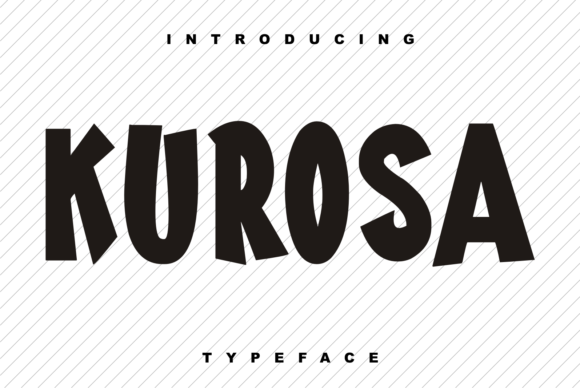
Kurosa is classified as a display font, characterized by its thick lettering and bold presence. Unlike text-oriented typefaces designed for extended reading passages, Kurosa is engineered to command attention. The design relies on substantial stroke weights and a geometric simplicity that creates a strong visual effect immediately upon viewing. This "cool" aesthetic is not merely decorative; it serves a functional purpose in capturing user engagement within crowded digital environments.
The font's structure is defined by its simplicity. By stripping away unnecessary flourishes or complex serifs, Kurosa achieves a modern, streamlined look. This reductionist approach allows the weight of the letters to become the primary driver of the design. When used correctly, this characteristic ensures that creations stand out against more conventional backgrounds, offering a level of visual hierarchy that lighter fonts cannot easily replicate.
Primary Use Cases and Applications
Designers typically consider Kurosa for scenarios where immediate impact is the priority. Its robust nature makes it particularly suitable for headlines, logos, and large-scale signage. In marketing materials, such as posters or banner advertisements, the thick strokes ensure legibility even from a distance or at smaller screen resolutions where fine details might be lost.
- Brand Identity: Companies looking to project strength, stability, or a modern edge often utilize Kurosa for their primary logotypes. The font's solid appearance conveys reliability and confidence.
- Editorial Headlines: In magazine layouts or blog headers, Kurosa can serve as a powerful anchor. It breaks up white space effectively and draws the eye to key topics without requiring additional graphical elements.
- Digital Interfaces: While not ideal for body text, Kurosa works well for call-to-action buttons or navigation menus where brevity and visibility are crucial.
The versatility of Kurosa extends to various media formats. Its clean lines translate well from print to screen, maintaining its structural integrity across different output devices. This consistency is vital for brands that need to maintain a unified visual language across multiple touchpoints.
Evaluating Benefits and Tradeoffs
While Kurosa offers significant advantages in terms of visual impact, every typeface comes with inherent limitations. Understanding these tradeoffs is essential before committing to a design system.
The primary benefit of Kurosa is its ability to create instant visual interest. In a sea of standard sans-serif or serif fonts, Kurosa differentiates itself through its sheer weight and unique character. This differentiation can lead to higher engagement rates in advertising contexts where seconds count. Furthermore, the simplicity of the design ensures that it remains readable even when scaled down, provided it is not used for dense paragraphs.
However, the very features that make Kurosa striking also limit its utility. The thick lettering reduces the amount of information that can fit on a line compared to thinner alternatives. This constraint can lead to increased vertical scrolling in web design or awkward spacing in printed layouts if not managed carefully. Additionally, the heavy weight can feel overwhelming if overused. A design dominated entirely by Kurosa may appear aggressive or monotonous rather than balanced.
Another consideration is readability for extended content. Because Kurosa is a display font, it lacks the refined x-height and open counters necessary for comfortable long-form reading. Using it for body text would likely cause reader fatigue and reduce comprehension. Therefore, its application must be restricted to short bursts of text to remain effective.
Situations Where Alternatives May Be Preferable
There are specific contexts where Kurosa may not be the optimal choice. If the goal is to convey elegance, tradition, or a delicate aesthetic, the boldness of Kurosa might clash with the intended message. For projects requiring a sophisticated or understated tone, a lighter weight sans-serif or a classic serif might provide better results.
Furthermore, in technical documentation or educational materials where clarity and neutrality are paramount, Kurosa could introduce unnecessary visual noise. In these scenarios, the priority is often information density and ease of scanning, which favors fonts with finer strokes and more neutral proportions. Similarly, if a brand identity requires high adaptability across extremely small sizes, such as mobile app icons or favicons, the thick details of Kurosa might lose definition, making a simpler, more scalable font a safer investment.
Practical Decision-Making Insights
Selecting a font involves more than just liking the style; it requires a strategic assessment of the project's goals. When evaluating Kurosa, designers should ask specific questions regarding the target audience and the medium of delivery. Does the audience respond to bold, assertive messaging? Is the content primarily consumed quickly or slowly?
To make an informed decision, it is advisable to test Kurosa in context. Create mockups that include both the headline and potential body text pairings. Observe how the font interacts with other elements on the page. Pay attention to the negative space around the letters; the thick strokes require adequate breathing room to avoid looking cluttered. If the design feels cramped or aggressive after testing, it may be time to reconsider.
- Define the Hierarchy: Ensure Kurosa is reserved for the most important elements. Avoid using it for secondary information.
- Check Legibility: Test the font at various sizes and distances to ensure the thick strokes do not merge together.
- Consider Pairing: Look for complementary fonts that offer contrast in weight and style to balance the boldness of Kurosa.
- Review Accessibility: Verify that the high contrast and weight meet accessibility standards for users with visual impairments.
Conclusion
Kurosa represents a powerful tool in the typographic arsenal, specifically tailored for creating strong visual statements. Its thick-lettered, cool display style offers a simple yet effective way to elevate designs that need to stand out. However, its effectiveness is contingent upon disciplined usage. By recognizing its strengths in headlines and branding while acknowledging its limitations in body text and subtle contexts, designers can leverage Kurosa to achieve their creative objectives.
Ultimately, the decision to use Kurosa should be driven by the specific needs of the project. It is not a universal solution but a specialized one. When aligned with the right goals, it transforms ordinary layouts into compelling visual experiences. For those willing to respect its boundaries and apply it strategically, Kurosa provides a reliable path to creating memorable and impactful work.