Toveoka: A Strategic Evaluation of a Bold Display Typeface
In the landscape of digital design and print media, the selection of typography is rarely a casual choice. It is a fundamental decision that dictates readability, brand perception, and the overall emotional tone of a project. Among the myriad of options available to designers, Toveoka has emerged as a distinct option for those seeking high-impact visual communication. This typeface is characterized by its thick lettering and cool display aesthetic. While it offers a simple structural foundation, it delivers a strong visual effect that can elevate creative work. However, before integrating this font into a workflow, it is essential to understand its specific characteristics, appropriate use cases, and potential limitations.
Understanding the Toveoka Type Family
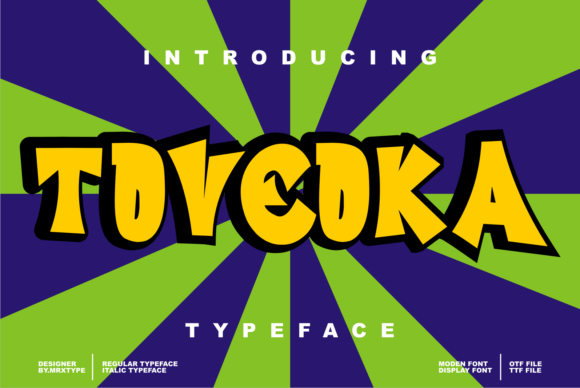
Toveoka is defined primarily by its weight and presence. Unlike variable fonts designed for body text or long-form reading, this typeface belongs to the display category. The core attribute of Toveoka is its thick lettering style, which creates a substantial silhouette on the page or screen. This heaviness is not merely an aesthetic choice but a functional one intended to capture attention immediately.
The "cool" descriptor often associated with Toveoka refers to its geometric precision combined with a modern edge. It avoids the ornate flourishes found in serif display fonts or the playful irregularities of hand-drawn styles. Instead, it maintains a clean, straightforward structure. This simplicity allows the font to communicate confidence without unnecessary distraction. When applied correctly, the strong visual effect of Toveoka ensures that headlines, logos, and key messaging stand out against more subdued background elements.
Strategic Reasons for Selection
Designers and business owners often evaluate Toveoka when they require immediate visual hierarchy. In environments where content competition is fierce, such as social media graphics, landing pages, or event posters, the ability to stop a user's scroll is paramount. Toveoka provides this capability through its inherent mass and contrast.
- Immediate Attention: The thick strokes ensure legibility even at small sizes or from a distance.
- Modern Branding: The clean lines align well with contemporary industries like technology, fashion, and lifestyle.
- Visual Consistency: Its uniform weight distribution creates a cohesive look across various marketing materials.
Furthermore, the font's simplicity makes it versatile regarding pairing. Because Toveoka commands so much attention on its own, it pairs effectively with lighter, more neutral sans-serif or serif fonts for supporting text. This balance allows creators to build a clear typographic scale where the headline grabs interest and the body text provides clarity.
Benefits and Practical Applications
The primary benefit of using Toveoka lies in its ability to enhance appeal without requiring complex graphic overlays. By relying on the strength of the typography itself, designers can achieve a polished look that feels intentional and professional. This is particularly useful for projects with tight deadlines or limited budgets, as it reduces the need for additional design elements to create impact.
Situations where Toveoka may be a strong fit include:
- Headline Design: It excels in large-format headers where brevity and boldness are required.
- Poster Art: The thick lettering holds up well in high-contrast poster designs for concerts, festivals, or product launches.
- Logo Construction: For brands aiming to project stability and strength, the solid forms of Toveoka offer a reliable foundation.
- Editorial Covers: Magazines and digital publications often use this style to signal authority and relevance.
In these contexts, the font acts as a visual anchor, guiding the viewer's eye and establishing the mood of the piece instantly.
Tradeoffs and Considerations
While Toveoka offers significant advantages for display purposes, it is not a universal solution. Every typeface comes with tradeoffs that must be weighed during the evaluation process. The most notable limitation of Toveoka is its unsuitability for body copy. The heavy stroke width reduces the x-height and increases ink density, making paragraphs of text difficult to read over extended periods.
Additionally, the strong visual effect can become overwhelming if overused. If every element on a page utilizes the same heavy weight, the design loses its hierarchy and becomes visually noisy. Designers must exercise restraint, ensuring that Toveoka is reserved for moments where maximum emphasis is necessary. Without this discipline, the font risks appearing aggressive rather than appealing.
Another consideration is the context of the brand identity. A company focused on delicate craftsmanship, traditional heritage, or soft emotional connection might find Toveoka too rigid or imposing. In such cases, the font's "cool" and thick nature could clash with the desired warm or intricate atmosphere.
When Alternatives Are Worth Considering
Evaluating Toveoka requires comparing it against other display options. If a project demands elegance over boldness, a thin or condensed display font might be a better choice. Similarly, if the goal is to evoke a retro or vintage feel, a slab serif or script typeface would likely serve the purpose more effectively than the modern geometry of Toveoka.
For applications requiring extreme versatility, a variable font family that includes both light and heavy weights might be preferable. This allows a single file to handle everything from subheads to main titles, whereas Toveoka is specialized for the upper end of the weight spectrum. Furthermore, in highly technical or data-heavy environments, a more neutral sans-serif might provide the clarity needed for information processing, rendering the dramatic flair of Toveoka unnecessary.
Decision-Making Insights
To determine whether Toveoka aligns with your goals, start by defining the primary function of the text. Ask yourself if the goal is to inform quickly or to engage emotionally. If the objective is to cut through noise and deliver a punchy message, Toveoka is a strong candidate. However, if the priority is sustained reading or subtle nuance, you should look elsewhere.
It is also crucial to test the font in its intended medium. A thick lettered font may look impressive on a high-resolution monitor but could suffer from pixelation or loss of detail when printed on certain paper stocks. Conversely, it might appear too dense on low-resolution mobile screens. Conducting these practical tests will reveal how the font behaves in real-world scenarios.
Ultimately, the decision to use Toveoka should be driven by the specific needs of the project rather than trends. Its power lies in its simplicity and strength. When used strategically to highlight key information, it can make creations more appealing than others by providing a clear, confident visual voice. By understanding its capabilities and limitations, designers can leverage Toveoka to achieve professional results that resonate with their audience.