Integrating Creepy Blood into Professional Design Workflows
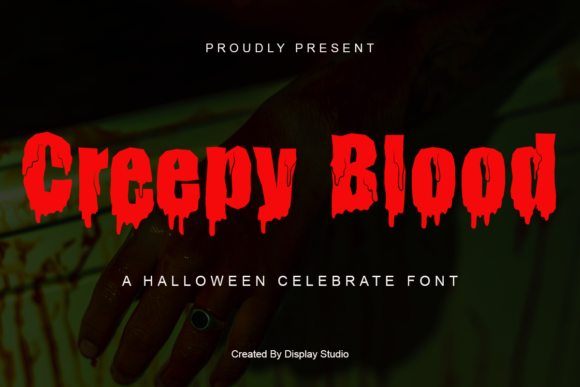
In the landscape of digital and physical design, selecting the right typography is rarely a trivial decision. It is a strategic move that dictates tone, readability, and emotional resonance. For professionals ranging from freelance graphic designers to marketing directors at small businesses, the choice of font often serves as the foundational element of a brand's visual identity. Creepy Blood stands out in this crowded market not merely as a decorative typeface, but as a specialized tool designed to evoke a specific, visceral atmosphere. This horror-looking and scary display font is engineered for impact, making it an essential asset for projects requiring immediate attention and a distinct mood.
Understanding where Creepy Blood fits within a broader creative process requires moving beyond simple aesthetic appreciation. It demands a practical assessment of its utility across various stages of production. Whether you are preparing assets for a t-shirt launch, designing a logo for a sportswear line with a dark edge, or creating advertisements for a seasonal campaign, the integration of this font must be deliberate. The goal is not just to make something look scary, but to ensure the typography functions effectively within the constraints of the medium while maintaining professional quality control.
Strategic Placement in the Creative Lifecycle
The utility of Creepy Blood extends through multiple phases of a project lifecycle. In the initial planning stage, designers and entrepreneurs often brainstorm themes that require strong visual anchors. Here, the font acts as a conceptual catalyst. When a team decides to pivot towards a horror-themed collection or a Halloween-specific marketing push, Creepy Blood provides an immediate visual language. It helps stakeholders visualize the final product before a single pixel is placed on a canvas or a screen.
During the execution phase, the font's role shifts to one of structural support. Because Creepy Blood is a display font, it is optimized for headlines, titles, and large-scale graphics rather than body text. This distinction is crucial for workflow efficiency. Using it correctly prevents the common pitfall of overusing heavy typography, which can clutter a design and reduce legibility. For instance, when creating a poster for a local event, the designer might use Creepy Blood for the main headline to grab attention, while pairing it with a clean sans-serif for the logistical details. This hierarchy ensures that the scary aesthetic does not compromise the communication of essential information.
Post-production and review also benefit from a clear understanding of the font's capabilities. Quality control involves checking how the glyphs render across different platforms. Since Creepy Blood features intricate, blood-like details, it may require higher resolution settings to maintain clarity when scaled down. Professionals must anticipate these technical requirements during the preparation phase to avoid blurry outputs in print or pixelation on high-DPI screens.
Applications Across Diverse Industries
The versatility of Creepy Blood allows it to permeate various sectors, provided the context is appropriate. Its primary strength lies in its ability to transform standard objects into memorable experiences.
- T-Shirts and Apparel: In the fashion industry, particularly within streetwear and alternative subcultures, typography is often the primary selling point. A hoodie featuring Creepy Blood instantly communicates a rebellious or edgy persona. The font's irregular strokes mimic organic imperfections, adding a layer of authenticity that flat, geometric fonts lack. For manufacturers, this means the design file must be prepared with vector precision to ensure the "dripping" effects translate cleanly onto fabric via screen printing or direct-to-garment (DTG) processes.
- Sportswear and Activewear: While counterintuitive, the fitness and sports markets often embrace aggressive aesthetics. Gym brands looking to differentiate themselves in a saturated market might utilize Creepy Blood for limited edition drops or specific training lines focused on intensity. The font conveys a sense of struggle and power, aligning well with the psychological state of athletes pushing their limits.
- Logos and Branding: Creating a logo with Creepy Blood is a high-stakes decision. It works best for niche businesses such as escape rooms, haunted attractions, specialty coffee roasters with a dark roast theme, or gaming studios. The key here is consistency. Once the font is selected, it becomes a core component of the brand identity. Marketers must ensure that the font is paired with complementary imagery and color palettes to avoid a disjointed look.
- Advertisements and Digital Media: In the realm of digital advertising, click-through rates often depend on the initial visual hook. Creepy Blood excels in banner ads, social media posts, and email headers where space is limited and attention spans are short. The font's bold presence cuts through the noise of a crowded feed, prompting users to stop scrolling.
Technical Considerations and Workflow Integration
For the productivity-minded user, the implementation of a new font involves more than just clicking "Type." It requires a systematic approach to file management, compatibility checks, and accessibility. Before integrating Creepy Blood into a client's project, it is vital to verify licensing terms. Commercial use in advertisements or mass-produced clothing often requires a specific license, distinct from personal use. Neglecting this step can lead to legal complications that disrupt business operations.
Compatibility is another critical factor. Different software suites handle display fonts differently. Adobe Illustrator, Photoshop, and Affinity Designer all render vectors and outlines in unique ways. To maintain efficiency, designers should convert text to outlines early in the process if the font will be sent to third-party printers who may not have the typeface installed. However, this must be done carefully to preserve the integrity of the complex letterforms found in Creepy Blood.
When working with teams, organization becomes paramount. If a marketing agency is launching a campaign using Creepy Blood, the font files should be stored in a centralized, accessible location. Naming conventions should be clear, and version control must be maintained to ensure everyone is working with the most up-to-date glyph set. This reduces friction and prevents errors where a designer might accidentally substitute a similar but incorrect font.
Optimizing for Print and Digital Outputs
The transition from digital design to physical reality is where many workflows encounter bottlenecks. Creepy Blood relies on fine details that can easily get lost in low-resolution printing. For clothing and merchandise, the ink spread on fabric can blur the edges of the letters. To mitigate this, pre-press adjustments are necessary. This might involve slightly increasing the stroke weight or adjusting the kerning to prevent letters from touching and merging into illegible blobs.
Conversely, on digital screens, the font's jagged edges can sometimes appear too harsh if the anti-aliasing settings are not optimized. Designers should test the font at various sizes, from small mobile icons to large billboard displays. This testing phase is part of the quality control process, ensuring that the intended "scary" effect is achieved without causing eye strain or visual fatigue for the viewer.
Long-Term Value and Consistency
Adopting Creepy Blood is not just about a single project; it is about building a cohesive visual strategy. For long-term use, consistency is the metric that defines success. A brand that sporadically uses a horror font alongside playful, cartoonish elements creates a confusing message. Instead, the font should be used deliberately to reinforce a specific narrative arc.
For educators and bloggers, Creepy Blood offers a way to break the monotony of standard web content. It can be used to highlight key takeaways, introduce chapter headings in e-books, or create engaging thumbnails for video content. However, the rule of thumb remains: use it sparingly. Overuse dilutes the impact, turning a powerful statement into background noise.
In conclusion, the effective use of Creepy Blood hinges on a deep understanding of its strengths and limitations. By treating it as a strategic tool rather than a mere decoration, professionals can integrate it seamlessly into their workflows. From the initial concept to the final printed product, careful planning and technical execution ensure that the font delivers the desired emotional response. Whether for a t-shirt line, a sportswear logo, or a high-stakes advertisement, Creepy Blood provides the perfect vehicle for designs that need to leave a lasting, unforgettable impression.
As creators continue to seek ways to stand out in a competitive marketplace, the ability to select and implement specialized typography like Creepy Blood becomes a valuable skill. It bridges the gap between artistic expression and functional design, allowing businesses and individuals to communicate complex moods with clarity and precision. By following these practical guidelines, users can maximize the potential of this unique font, ensuring that every project benefits from its distinctive character.