Holly Frosty Font Evaluation
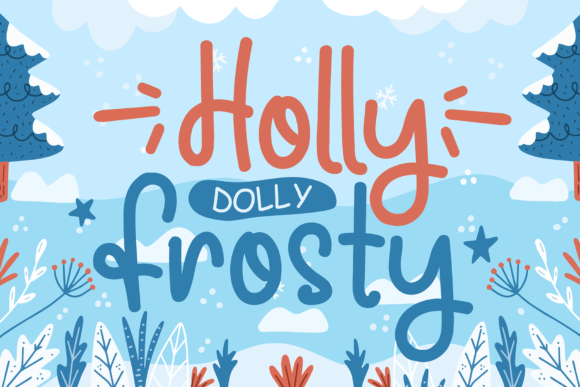
Selecting the right typeface is a critical step in visual communication, particularly when the goal is to evoke specific emotions or establish a distinct brand voice. Holly Frosty is a monoline display font designed to capture the essence of winter through a playful and natural handwritten aesthetic. Unlike rigid geometric sans-serifs or traditional serif fonts that convey formality, this typeface offers a fluid, organic feel that mimics the motion of a hand holding a marker or brush. For designers working on seasonal projects, packaging, or branding initiatives, understanding the specific characteristics and limitations of Holly Frosty is essential before committing to it as a primary design element.
Understanding the Design Characteristics
At its core, Holly Frosty is categorized as a display font with a monoline structure. This means that the strokes maintaining a consistent width throughout the letterforms, creating a uniform and clean appearance without the variation in thickness found in calligraphy scripts. The "handwritten touch" mentioned in its description refers to the subtle irregularities in the stroke ends and connections between letters. These imperfections are intentional, preventing the text from looking mechanically generated by software algorithms.
The font's design philosophy leans heavily into the themes of winter and holidays. The letterforms often feature rounded terminals and soft edges that suggest snow accumulation or frost. When used in a design context, Holly Frosty immediately signals a festive atmosphere. It is not merely a decorative addition; the legibility remains high enough for short phrases while retaining enough personality to stand out against more neutral backgrounds. The monoline nature ensures that even at smaller sizes, the text does not break up or become muddy, making it versatile for various media applications.
Strategic Applications and Benefits
Designers frequently seek out Holly Frosty for projects requiring an immediate emotional connection with the viewer. The most common application is in seasonal branding. Whether creating logos for holiday pop-up shops, designing gift tags, or developing marketing materials for winter sales, the font provides a ready-made narrative of warmth and festivity. Because it looks handwritten, it adds a layer of authenticity that mass-produced corporate fonts often lack. Consumers tend to respond positively to typography that feels personal and crafted, and Holly Frosty delivers this effect efficiently.
In the realm of packaging, this typeface excels at differentiating products on crowded shelves. A box of cookies, a bottle of hot cocoa mix, or a limited-edition cosmetic product can benefit significantly from the playful curves of Holly Frosty. The monoline style allows for easy integration with illustrations, such as holly leaves, snowflakes, or winter landscapes, without creating visual clutter. The consistent stroke weight ensures that the text balances well with graphic elements, maintaining a cohesive look across different product sizes.
- Seasonal Relevance: Instantly communicates a winter or holiday theme without the need for additional imagery.
- Readability: Despite its script-like appearance, the monoline structure maintains clarity for headlines and short copy.
- Versatility: Suitable for digital screens, print materials, and physical merchandise.
- Authenticity: The handwritten quality fosters a sense of human connection and artisanal quality.
Tradeoffs and Considerations
While Holly Frosty offers distinct advantages for specific use cases, it is not a universal solution. One of the primary tradeoffs involves its thematic specificity. The font is so strongly associated with winter and holidays that using it outside of these contexts can appear jarring or confusing. Attempting to apply Holly Frosty to a technology startup, a medical clinic, or a financial report would likely undermine the brand's credibility. The playful nature of the letters suggests informality, which may clash with industries that require a tone of seriousness and precision.
Another consideration is the limitation of character sets. Display fonts often prioritize aesthetic appeal over extensive linguistic support. While Holly Frosty typically covers standard Latin characters, it may lack the specialized glyphs required for languages with complex diacritics or non-Latin scripts. Designers must verify the available character set before beginning a project that targets a global audience. Additionally, because the font relies on a specific stylistic choice, it may not pair easily with all other typefaces. Finding a complementary body text font requires careful selection to ensure the contrast between the display header and the informational text is harmonious rather than chaotic.
Situations Where Alternatives Are Preferable
There are scenarios where relying on Holly Frosty would be a strategic error. If a brand aims to convey modern minimalism or industrial strength, a geometric sans-serif or a heavy slab serif would be more appropriate. Similarly, if the project involves long-form content, such as blog posts, books, or user manuals, this display font is unsuitable for body text due to potential reading fatigue. In these cases, a clean, highly legible sans-serif or a classic serif would better serve the reader's needs.
Furthermore, if the design goal is to achieve a luxurious or elegant feel, the playful nature of Holly Frosty might detract from the desired sophistication. High-end brands often prefer thin, delicate scripts or sharp, high-contrast serifs to communicate exclusivity. In such instances, exploring alternatives that offer elegance without the "toy-like" quality of a winter-themed display font is advisable.
Making the Decision
To determine if Holly Frosty aligns with your project goals, evaluate the primary message you wish to convey. Ask yourself if the emotion of the season is central to the communication. If the answer is yes, and the target audience includes families, children, or consumers looking for gifts, this font is a strong candidate. It effectively bridges the gap between professional design and personal expression.
However, if the project requires year-round usability or serves a niche audience that values neutrality, it is wiser to reserve Holly Frosty for accent elements only, such as dates, small icons, or promotional banners, while utilizing a more neutral typeface for the main content. By weighing the benefits of its thematic charm against the limitations of its scope, designers can make informed decisions that enhance the overall effectiveness of their visual identity. Ultimately, the success of Holly Frosty lies in its ability to fit precisely within the boundaries of its intended seasonal context.