Why Lucky Seven Is the Bold Choice for Vintage-Inspired Branding
In a visual landscape dominated by clean, minimalist sans-serif typefaces and highly legible geometric fonts, finding a display option that commands attention while retaining a sense of history can be challenging. This is where Lucky Seven enters the conversation. It is not merely another font file to download; it is a specific stylistic intervention designed to evoke the energy of mid-century signage, carnival posters, and vintage labels. For designers and brand strategists aged 20 to 50 who are evaluating typography options for high-impact projects, understanding the distinct character of Lucky Seven is essential before making a final selection.
This evaluation explores what makes this font distinct, how it fits into broader design categories, and when it serves as the optimal tool versus when a different approach might be necessary. The goal is to provide a clear, practical assessment of its utility in real-world applications.
The Distinctive Character of Lucky Seven
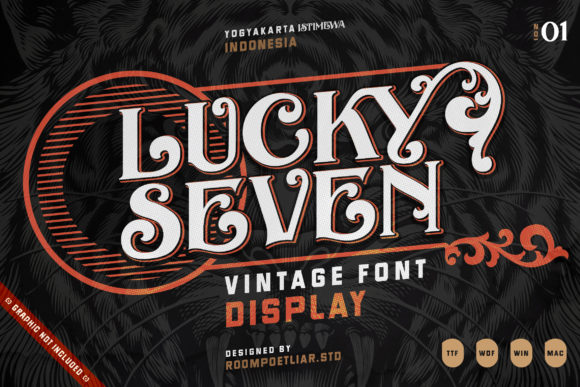
Lucky Seven is defined by its bold, retro aesthetic. Unlike modern grotesque or humanist sans-serifs that prioritize neutrality and invisibility, this typeface is designed to be seen. It features thick strokes, sharp angles, and a playful curvature that suggests movement and excitement. The name itself implies a connection to luck, chance, and perhaps the classic imagery of slot machines or old-fashioned lottery tickets, though its application extends far beyond gambling themes.
The "vintage" quality of the font is achieved through specific letterforms that mimic hand-painted signs from the early to mid-20th century. The terminals often flare slightly, and the counter spaces (the enclosed areas within letters like 'e' or 'a') are treated with a unique weight distribution that gives the text a heavy, grounded feel. This creates an immediate emotional response: nostalgia, fun, and reliability mixed with a touch of whimsy.
When you apply Lucky Seven to a project, you are not just selecting a font; you are setting a tone. It transforms a standard headline into a visual event. The font's ability to look stunning on any poster, label, or branding asset stems from its high contrast against white space and its capacity to hold its own even at smaller sizes, provided the context is appropriate.
Comparison with Modern Display Fonts
To understand the value of Lucky Seven, it helps to compare it with other popular display categories. Many contemporary brands opt for "Neo-Grotesque" or "Retro-Modern" fonts that attempt to blend vintage vibes with digital clarity. While these alternatives offer excellent readability on screens, they often lack the raw, tactile personality found in Lucky Seven.
- Neon and Glitch Styles: Some modern fonts focus on digital distortion or glowing effects. These are excellent for tech events but can feel cold or overly aggressive for lifestyle brands. Lucky Seven offers warmth without sacrificing boldness.
- Standard Serifs: Traditional serif fonts convey authority and tradition. However, they can appear stiff or academic. If a brand wants to communicate heritage but also fun, a standard serif may miss the mark, whereas Lucky Seven bridges that gap effectively.
- Handwritten Scripts: Script fonts are often used to add a personal touch. However, they can struggle with legibility when scaled up for large banners. Lucky Seven maintains structural integrity better than most scripts, ensuring the message remains clear even when viewed from a distance.
The tradeoff here is versatility. While Lucky Seven is a powerhouse for headlines, it is less suitable for long-form body copy compared to neutral sans-serifs. Its strength lies in its specialization. It is a tool for emphasis, not for narration.
Evaluating Use Cases and Strategic Fit
Selecting the right typography requires matching the font's personality to the brand's voice. Lucky Seven is not a one-size-fits-all solution. It excels in specific scenarios where visual impact is the primary objective.
Ideal Applications
The font shines brightest in environments where the viewer has only seconds to engage with the content. Consider the following scenarios:
- Event Posters and Flyers: For music festivals, local markets, or community gatherings, Lucky Seven creates an atmosphere of celebration. Its bold lines cut through cluttered social media feeds, drawing the eye immediately.
- Product Labels and Packaging: On craft beer cans, coffee bags, or boutique food items, the vintage style suggests authenticity and artisanal quality. It signals that the product inside is made with care and perhaps a bit of rebellion against mass-produced uniformity.
- Logo Design and Wordmarks: For businesses aiming to establish a strong, memorable identity quickly, this font provides a solid foundation. It works particularly well for brands in the hospitality, entertainment, or creative industries.
- Social Media Graphics: When creating quote cards or promotional graphics, the font adds a layer of personality that standard corporate fonts cannot achieve.
In these contexts, the font acts as a visual hook. It tells the audience, "This is something special," before they even read the details.
Limitations and Tradeoffs
No single font is perfect for every situation. Designers must be aware of the limitations of Lucky Seven to avoid misapplication.
Legibility Constraints: Due to its decorative nature, the font is not ideal for dense blocks of text. Using it for paragraphs or instructions will reduce readability and fatigue the reader. It should be reserved for titles, subheads, and short phrases.
Tone Mismatch: If a brand operates in a highly regulated industry such as finance, healthcare, or legal services, Lucky Seven might undermine credibility. The playful, lucky theme could clash with the need for seriousness and trust. In these cases, a more restrained typeface is usually the safer choice.
Scalability Issues: While bold, extremely small sizes may cause the intricate details of the vintage styling to blur, especially on low-resolution screens. Testing the font at actual usage size is a critical step in the design process.
Decision Factors for Professional Selection
When comparing resources for a new project, professionals often weigh several factors beyond mere aesthetics. How does Lucky Seven stack up against the broader market of display fonts?
Uniqueness vs. Familiarity: A major advantage of using Lucky Seven is that it stands out. In a sea of generic Helvetica or Arial clones, a vintage-style font creates a unique visual signature. However, there is a risk of the design feeling "dated" if not balanced with modern layout techniques. The key is to pair the vintage font with clean, contemporary spacing and photography.
Cohesion with Brand Assets: Before committing, evaluate how the font interacts with your existing color palette and imagery. Lucky Seven often pairs beautifully with warm earth tones, deep reds, mustard yellows, and distressed textures. It may clash with cool, futuristic gradients or sterile white-on-white minimalism unless the contrast is intentional.
Technical Implementation: From a technical standpoint, ensure the font family includes the necessary weights and characters for your needs. Most professional display fonts offer multiple weights, but some vintage styles are limited to a single bold weight. Verify that the font supports the language requirements of your target audience, including any special accents or symbols needed for international campaigns.
Alternatives and Complementary Approaches
If Lucky Seven does not perfectly align with your vision, there are alternative paths to explore. Sometimes, the best result comes from combining typefaces rather than relying on a single font.
Mixing Styles: A common strategy is to use Lucky Seven for the main headline and pair it with a simple, understated sans-serif for body text. This creates a dynamic contrast that highlights the vintage element while maintaining readability. For example, using a clean geometric sans-serif alongside the bold curves of Lucky Seven can modernize the overall look, preventing it from feeling too retro.
Exploring Similar Categories: If the specific "lucky" or "carnival" vibe of Lucky Seven feels too thematic, consider exploring other vintage-inspired categories. There are fonts that offer the same stroke weight and retro charm but lean more towards industrial, western, or art deco styles. These alternatives provide the same level of impact without the specific connotations of luck or games.
Digital-First Alternatives: For projects that require heavy web usage, consider variable fonts that offer similar vintage characteristics but with better performance and rendering across devices. While Lucky Seven is excellent for print and static images, web-specific variants might offer smoother scaling and faster load times.
Final Thoughts on Integration
The decision to use Lucky Seven ultimately depends on the story you want to tell. It is a font that demands confidence. It is not subtle, and it does not try to hide. It invites the viewer into a world of bold choices and vibrant energy.
For designers looking to create posters, labels, or branding that stands out in a crowded marketplace, this font offers a compelling set of tools. Its vintage styling provides a timeless appeal that resonates with audiences seeking authenticity, while its bold structure ensures visibility in the digital age. By carefully considering the tradeoffs between impact and legibility, and by pairing it with complementary design elements, Lucky Seven can become the cornerstone of a successful visual identity.
Whether you are launching a new product, promoting an event, or rebranding an established business, exploring the possibilities of this typeface is a worthwhile investment. It opens the door to endless creative potential, proving that sometimes, the best way to move forward is to look back at the classics with fresh eyes.