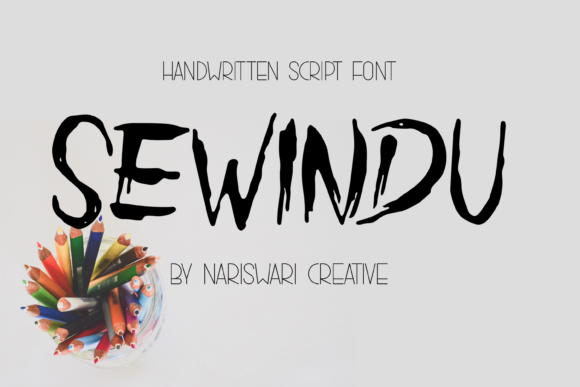
Unlocking Authenticity: How Sewindu Transforms Visual Narratives
In the crowded digital landscape, where visual noise is constant and attention spans are fleeting, the difference between a design that resonates and one that fades into the background often comes down to a single element: typography. While many designers rely on geometric sans-serifs or rigid serifs to convey modernity, there is a growing movement toward typefaces that capture the organic imperfections of human creation. Sewindu stands at the forefront of this movement, offering a unique display font that bridges the gap between traditional craftsmanship and contemporary digital application.
This typeface is not merely a collection of characters; it is a digital artifact born from the natural stroke of a brush. By mimicking the fluid dynamics of ink on paper, Sewindu injects a sense of authenticity and warmth into projects that might otherwise feel sterile. Whether you are a professional graphic designer seeking a signature style, a business owner looking to elevate brand identity, or an educator creating engaging materials, understanding how to leverage such a distinctive tool can significantly alter the outcome of your work.
The Essence of Organic Typography
To appreciate the utility of Sewindu, one must first understand the philosophy behind organic typography. For decades, screen design has been dominated by precision. Fonts were built on grids, with uniform stroke widths and predictable spacing to ensure legibility across low-resolution monitors. However, as display technologies have improved and user expectations have shifted, there is a renewed desire for personality in type.
Sewindu addresses this by prioritizing the "hand" over the "machine." The font's character set features variable stroke weights that simulate the pressure applied by a brush tip. When a designer uses Sewindu, they are effectively embedding the energy of the moment of creation into the static text. This creates a psychological connection with the viewer, who subconsciously recognizes the human touch. It signals that care was taken, that the content is bespoke rather than mass-produced.
- Fluid Dynamics: The transitions between thick and thin strokes are gradual, avoiding the harsh angles found in vector-based fonts.
- Textural Depth: Even in digital formats, the font suggests a tactile quality, inviting the reader to imagine the texture of the surface.
- Imperfect Perfection: Minor variations in letterforms prevent the "robotic" feel of standard fonts, adding a layer of charm and uniqueness.
Strategic Applications Across Creative Industries
The versatility of Sewindu lies in its ability to adapt to various contexts while maintaining its core identity. It is not limited to a single niche but serves as a powerful accent in a wide array of creative projects. Its primary strength is acting as a focal point, drawing the eye immediately to key messages.
Elevating Editorial and Print Media
In the realm of magazines and editorial design, typography sets the tone before a single word is read. Sewindu is exceptionally effective for headlines, pull quotes, and section dividers. In fashion magazines, for instance, using Sewindu for feature article titles can evoke a sense of high-end exclusivity and artistic flair. The brush-like quality complements photography and illustrations, creating a cohesive visual language that feels curated rather than assembled.
Similarly, for flyers and posters, the goal is often immediate impact. A bold headline in Sewindu cuts through the clutter of a busy environment. Because the font carries inherent weight and presence, it requires less visual support to command attention. This makes it ideal for event promotions, concert posters, and cultural announcements where the vibe needs to be communicated instantly.
Digital Presence and Social Engagement
Moving to the digital sphere, the challenge shifts from physical visibility to screen engagement. Social media platforms are saturated with standardized content. Brands that wish to stand out often turn to custom typography. Sewindu offers a way to create social media graphics that look hand-crafted, even when produced digitally. Makeup brands, in particular, benefit from this aesthetic. The fluid lines of the font mirror the textures of cosmetics—creams, powders, and liquids—making it a perfect match for product packaging designs and promotional posts.
When used in merchandise design, such as t-shirts, tote bags, or stickers, Sewindu adds a boutique feel. It transforms generic items into statement pieces. The font's ability to carry emotion allows consumers to connect with the brand on a personal level, fostering loyalty beyond just the utility of the product.
Why Designers Choose Sewindu
The decision to incorporate a specific typeface is rarely arbitrary. For professionals, the choice is driven by functional requirements and aesthetic goals. Sewindu offers several distinct advantages that make it a valuable asset in a designer's toolkit.
- Brand Differentiation: In a market where many companies use similar sans-serif fonts, Sewindu provides a unique identifier. It helps a brand establish a memorable voice that is difficult to replicate.
- Narrative Support: Every font tells a story. Sewindu tells the story of artistry and tradition. Using it aligns the text with themes of heritage, creativity, and manual skill, which is crucial for storytelling campaigns.
- Visual Hierarchy: The varying stroke widths naturally guide the reader's eye. Designers can use the heavy parts of the letters to emphasize keywords without needing additional graphical elements like boxes or underlines.
- Emotional Resonance: As mentioned earlier, the human element in the font triggers an empathetic response. This is particularly useful for non-profits, educational institutions, and community organizations aiming to build trust.
However, the effectiveness of Sewindu relies heavily on proper implementation. It is a display font, meaning it is designed for large sizes and short bursts of text. Overusing it in body copy can lead to readability issues, as the organic nature of the letters may become distracting at small scales. The key is balance.
Implementation Strategies for Maximum Impact
To get the most out of Sewindu, creators must approach it with a strategic mindset. The font should be treated as a star performer rather than a supporting cast member. Here are practical observations on how to integrate it effectively into workflows.
Pairing for Balance
Because Sewindu is so expressive, it pairs best with neutral, understated typefaces. A clean sans-serif or a classic serif works well as a secondary font. The contrast between the structured partner font and the fluid Sewindu creates a dynamic tension that keeps the design interesting. For example, pairing Sewindu headlines with a simple, legible sans-serif for body text ensures that the message is both beautiful and accessible.
Pro Tip: Avoid pairing Sewindu with other display fonts. Two competing styles will clash, resulting in visual chaos. Let Sewindu remain the singular voice of personality in the layout.
Contextual Usage
The context in which the font appears dictates its success. On a banner for a yoga studio, Sewindu conveys flow and movement perfectly. On a flyer for a tech startup, it might feel out of place unless the startup specifically positions itself as disrupting norms with a "human-centric" approach. Educators might find it excellent for children's literature covers or art class materials, where creativity is the central theme.
Consider the medium as well. On a mobile screen, the intricate details of the brush strokes need to remain visible. Ensuring sufficient resolution and contrast is vital. If the font is too small or the background too complex, the unique characteristics of Sewindu will be lost, negating its value.
The Broader Trend Toward Human-Centric Design
The rise of fonts like Sewindu is not an isolated incident but part of a larger shift in design culture. As artificial intelligence and automation become more prevalent in content creation, there is a counter-movement valuing the human element. Consumers are increasingly drawn to products and services that feel authentic and genuine.
Research in consumer psychology suggests that people trust brands that appear transparent and human. Typography plays a subtle but significant role in this perception. A font that looks generated by a computer algorithm can feel cold and distant. Conversely, a font that mimics the imperfections of human handwriting feels approachable and trustworthy.
This trend extends beyond mere aesthetics; it influences how information is consumed. In an era of information overload, content that feels crafted and intentional stands out. Sewindu facilitates this by making the text itself feel like a piece of art. It encourages the viewer to slow down and appreciate the design, thereby increasing engagement time.
Considerations for Creators and Researchers
For researchers studying visual communication and hobbyists experimenting with new tools, Sewindu offers a rich subject of exploration. It demonstrates how digital tools can preserve traditional artistic techniques. Studying the construction of such fonts can provide insights into the mechanics of calligraphy and brushwork.
Business owners should consider the long-term implications of their branding choices. Adopting a unique font like Sewindu can future-proof a brand against trends that come and go. While geometric fonts may cycle in and out of fashion, the appeal of the handmade aesthetic tends to be timeless. However, consistency is key. Once a brand adopts this style, it should maintain it across all touchpoints to build a strong, recognizable identity.
It is also important to note the technical aspects of licensing and usage. While the font is versatile, ensuring that the license permits the intended use (e.g., commercial merchandise vs. personal blogs) is a critical step often overlooked. Proper licensing protects both the creator and the user, fostering a healthy ecosystem for digital assets.
Conclusion: A Tool for Authentic Expression
In summary, Sewindu represents more than just a font file; it is a vehicle for authentic expression in a digital world. Its unique origin as a typeface created from the natural stroke of a brush gives it a soul that standard fonts lack. From magazines and social media to merchandise and fashion, its applications are vast and varied.
By understanding the characteristics of Sewindu and applying it thoughtfully within a broader design strategy, professionals and hobbyists alike can elevate their work. It invites designers to embrace imperfection, celebrate the human touch, and create visuals that resonate on a deeper emotional level. As we move forward in the digital age, tools like Sewindu remind us that technology does not have to replace humanity—it can enhance it, providing new ways to express the timeless art of writing and design.
Whether you are launching a new makeup line, designing a poster for a local event, or simply looking to add a splash of creativity to your next project, Sewindu offers the versatility and character needed to make your work truly outstanding. The brush is in your hand; now it is time to write your story.