Why Vertagor Stands Out in a Sea of Mediocre Fonts
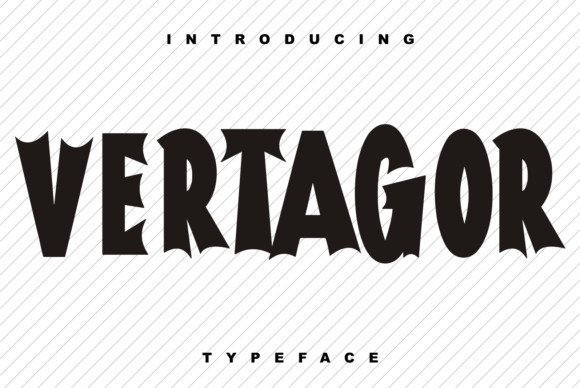
In the crowded world of digital design, where attention spans are fleeting and visual noise is constant, making a statement requires more than just good content; it demands a voice that cuts through the clutter. This is where Vertagor enters the conversation. It is not merely another typeface to add to your library; it is a thick-lettered, cool display font designed to deliver a strong visual effect instantly. Whether you are a seasoned graphic designer, a small business owner crafting a logo, or a blogger looking to elevate your headlines, understanding how to leverage this specific aesthetic can transform the perceived quality of your work.
Many creators assume that any bold font will suffice for headers or titles. They reach for standard sans-serifs or generic scripts without considering the unique character of their project. The mistake here is underestimating the power of typography as a communication tool. A font like Vertagor offers a simple yet impactful presence that makes your creations appear more appealing than those using generic alternatives. However, simply downloading the file is only the first step. To truly harness its potential, you must understand how to apply it correctly to avoid common pitfalls that can undermine your professional image.
The Trap of Overusing Bold Typography
One of the most frequent errors designers make with display fonts like Vertagor is overuse. Because the letters are thick and visually heavy, there is a natural tendency to want to use them everywhere. You might be tempted to set entire paragraphs in this style, assuming that "bigger" equals "better." This approach often backfires, creating a wall of text that is difficult to read and visually exhausting for the audience.
When you saturate a layout with such a dominant typeface, you dilute its impact. The strong visual effect becomes background noise rather than a focal point. Instead of guiding the reader's eye to key information, the font overwhelms the content. The result is a design that feels unbalanced and amateurish. To avoid this, reserve Vertagor for high-impact areas: main headlines, section dividers, logos, or short call-to-action buttons. Let it shine by giving it space to breathe against cleaner, lighter body text.
Pairing Strategies for Maximum Impact
Another overlooked detail is the pairing process. A common misconception is that a thick display font needs another thick font to match it. In reality, contrast is your best friend. If you pair Vertagor with another heavy serif or sans-serif, the design loses definition and looks muddy. The strength of Vertagor lies in its simplicity and distinct shape, which shines when contrasted with a neutral, highly legible font.
For optimal results, pair Vertagor with a clean sans-serif or a classic serif for body copy. This combination ensures that while your headlines grab attention immediately, the supporting text remains easy to scan and digest. Think of it as a stage performance: Vertagor is the lead actor in a spotlight, while the body text is the supporting cast ensuring the story is told clearly. When these elements work in harmony, the overall presentation becomes cohesive and professional.
Evaluating Readability Across Different Contexts
Before committing to Vertagor for a specific project, it is crucial to evaluate how it performs in different contexts. A font that looks stunning on a large billboard or a hero banner might become illegible on a mobile screen or in small print sizes. The thickness of the letters, which provides the cool visual effect, can cause characters to merge together if they are scaled down too much or if the line spacing is too tight.
Beginners often overlook the technical constraints of their medium. For instance, using a display font for long-form articles or legal disclaimers is a recipe for poor user experience. Readers may struggle to distinguish between similar characters, leading to confusion and frustration. This directly affects the efficiency of your communication. If your audience has to squint or re-read sentences to understand the message, you have failed to convey your point effectively.
To ensure usability, always test your designs across various devices and screen sizes. Check how the font renders on low-resolution screens and ensure there is sufficient whitespace around the text. By prioritizing readability over pure aesthetics, you protect the integrity of your message and ensure that your designs remain accessible to everyone.
Common Licensing Misunderstandings
Beyond design mechanics, there is a significant practical consideration regarding licensing that many professionals miss. When purchasing or downloading a font like Vertagor, it is vital to read the license agreement carefully. There is often a distinction between personal use licenses and commercial use licenses. Assuming that a free download allows for unlimited commercial application is a dangerous error that can lead to legal complications and financial penalties.
If you are a freelancer, an entrepreneur, or a marketer running paid campaigns, you must ensure your usage rights cover commercial projects. Using a font without the proper license can jeopardize your reputation and your business. Always verify the terms before integrating the font into client work, branding materials, or products for sale. Taking the time to check these details upfront saves you from costly corrections later and ensures peace of mind.
Strategic Application for Better Results
To get the most out of Vertagor, you need a strategy that aligns with your brand identity and communication goals. Rather than treating it as a generic decoration, view it as a strategic asset. Ask yourself what emotion or impression you want to convey. Is it boldness? Confidence? Modernity? Vertagor excels at projecting a sense of strength and reliability, making it ideal for industries like fitness, technology, construction, or entertainment.
- Check Color Contrast: Ensure the color of the font contrasts sufficiently with the background. A thick font can lose definition if the colors are too similar.
- Limit Character Count: Use shorter phrases to maximize the impact of the letterforms. Long words can sometimes look cramped in thick styles.
- Test in Monochrome: Preview your design in black and white to ensure the shape of the font holds up without relying on color effects.
By following these guidelines, you move beyond simple decoration and create designs that communicate with clarity and purpose. The goal is not just to make something look "cool," but to make it effective. When you respect the limitations and strengths of the font, you produce work that stands out for the right reasons.
Making the Right Choice for Your Project
Ultimately, the decision to use Vertagor should be driven by the specific needs of your project. It is not a one-size-fits-all solution. If your project requires subtlety, elegance, or a delicate touch, this thick-lettered font might be too aggressive. However, if your goal is to make a strong first impression and capture attention quickly, Vertagor offers a compelling solution.
Take the time to compare it with other options in your workflow. Look at how it interacts with your existing brand assets. Does it complement your logo? Does it fit the tone of your marketing campaigns? By approaching the selection process with a critical eye and a focus on functionality, you ensure that every design choice adds value. Avoid the trap of choosing a font simply because it is trendy; choose it because it serves your vision and communicates your message effectively.
With careful planning and a clear understanding of its capabilities, Vertagor can become an indispensable tool in your creative arsenal. It transforms ordinary layouts into striking visuals, helping you connect with your audience on a deeper level. Remember, the best design is invisible—it works so well that the viewer doesn't notice the effort, they just feel the impact.